Where the sky was forecast to be clear
Hourly cloud cover for the evening of August 12, sampled at 18:00 UTC — the forecast hour closest to maximum eclipse across the path. Lower is better.
On the path of totality
Totality crosses Greenland, western Iceland, and northern Spain through to the Balearic Islands in the evening.
| City | Cloud at 18:00 UTC | Sky | Verdict | Trend 16→20h UTC |
|---|---|---|---|---|
| Reykjavik | 100% | Overcast | Unlikely | 100 · 100 · 100 · 98 · 99 |
| Westman Islands | 99% | Overcast | Unlikely | 100 · 100 · 99 · 100 · 100 |
| Ísafjörður | 97% | Overcast | Unlikely | 65 · 93 · 97 · 99 · 99 |
| A Coruña | 34% | Partly cloudy | Looking good | 4 · 31 · 34 · 15 · 21 |
| Lugo | 10% | Clear | Looking good | 12 · 14 · 10 · 6 · 4 |
| Oviedo / Gijón | 27% | Partly cloudy | Looking good | 16 · 22 · 27 · 34 · 33 |
| Santander | 14% | Clear | Looking good | 12 · 14 · 14 · 26 · 33 |
| León | 3% | Clear | Looking good | 7 · 5 · 3 · 4 · 6 |
| Palencia | 1% | Clear | Looking good | 0 · 0 · 1 · 1 · 1 |
| Valladolid | 1% | Clear | Looking good | 0 · 0 · 1 · 1 · 1 |
| Bilbao | 2% | Clear | Looking good | 3 · 3 · 2 · 11 · 25 |
| Vitoria-Gasteiz | 4% | Clear | Looking good | 30 · 12 · 4 · 14 · 3 |
| Burgos | 9% | Clear | Looking good | 1 · 4 · 9 · 8 · 1 |
| Logroño | 9% | Clear | Looking good | 7 · 10 · 9 · 5 · 2 |
| Soria | 14% | Clear | Looking good | 4 · 5 · 14 · 21 · 19 |
| Zaragoza | 5% | Clear | Looking good | 13 · 10 · 5 · 3 · 1 |
| Tarragona | 6% | Clear | Looking good | 12 · 10 · 6 · 20 · 18 |
| Valencia | 19% | Clear | Looking good | 12 · 12 · 19 · 30 · 21 |
| Palma de Mallorca | 3% | Clear | Looking good | 8 · 8 · 3 · 2 · 1 |
| Ibiza | 15% | Clear | Looking good | 5 · 4 · 15 · 24 · 5 |
Near-total partial eclipse
Just outside the path — a very deep partial eclipse, well worth stepping outside for.
| City | Cloud at 18:00 UTC | Sky | Verdict | Trend 16→20h UTC |
|---|---|---|---|---|
| Madrid | 0% | Clear | Looking good | 0 · 0 · 0 · 0 · 0 |
| Barcelona | 29% | Partly cloudy | Looking good | 15 · 12 · 29 · 30 · 5 |
| Porto | 16% | Clear | Looking good | 12 · 14 · 16 · 45 · 64 |
| Lisbon | 0% | Clear | Looking good | 0 · 0 · 0 · 0 · 6 |
Deep partial eclipse
Most of Europe sees a large partial eclipse in the evening — a substantial bite out of the sun.
| City | Cloud at 18:00 UTC | Sky | Verdict | Trend 16→20h UTC |
|---|---|---|---|---|
| London | 0% | Clear | Looking good | 0 · 0 · 0 · 1 · 1 |
| Dublin | 20% | Clear | Looking good | 35 · 19 · 20 · 35 · 19 |
| Edinburgh | 60% | Mostly cloudy | Coin flip | 64 · 68 · 60 · 60 · 69 |
| Glasgow | 56% | Mostly cloudy | Coin flip | 70 · 68 · 56 · 62 · 68 |
| Inverness | 89% | Overcast | Unlikely | 35 · 61 · 89 · 65 · 58 |
| Aberdeen | 54% | Mostly cloudy | Coin flip | 40 · 48 · 54 · 57 · 54 |
| Lerwick | 48% | Partly cloudy | Coin flip | 43 · 41 · 48 · 93 · 69 |
| Newcastle | 53% | Mostly cloudy | Coin flip | 29 · 54 · 53 · 47 · 40 |
| Manchester | 27% | Partly cloudy | Looking good | 24 · 32 · 27 · 27 · 34 |
| Liverpool | 24% | Clear | Looking good | 31 · 39 · 24 · 39 · 31 |
| Leeds | 35% | Partly cloudy | Looking good | 37 · 18 · 35 · 39 · 29 |
| Birmingham | 16% | Clear | Looking good | 12 · 29 · 16 · 23 · 21 |
| Cardiff | 14% | Clear | Looking good | 5 · 11 · 14 · 13 · 9 |
| Swansea | 24% | Clear | Looking good | 9 · 22 · 24 · 16 · 2 |
| Plymouth | 3% | Clear | Looking good | 2 · 1 · 3 · 1 · 0 |
| Bristol | 6% | Clear | Looking good | 10 · 20 · 6 · 6 · 6 |
| Exeter | 1% | Clear | Looking good | 3 · 1 · 1 · 1 · 0 |
| Brighton | 0% | Clear | Looking good | 0 · 0 · 0 · 0 · 0 |
| Cambridge | 0% | Clear | Looking good | 2 · 9 · 0 · 0 · 1 |
| Belfast | 57% | Mostly cloudy | Coin flip | 59 · 89 · 57 · 32 · 31 |
| Paris | 0% | Clear | Looking good | 0 · 0 · 0 · 0 · 0 |
| Amsterdam | 4% | Clear | Looking good | 5 · 4 · 4 · 11 · 3 |
| Brussels | 1% | Clear | Looking good | 2 · 1 · 1 · 0 · 0 |
| Berlin | 21% | Clear | Looking good | 19 · 14 · 21 · 15 · 19 |
| Zürich | 0% | Clear | Looking good | 0 · 0 · 0 · 0 · 0 |
| Milan | 39% | Partly cloudy | Looking good | 24 · 30 · 39 · 37 · 34 |
| Rome | 37% | Partly cloudy | Looking good | 44 · 42 · 37 · 44 · 21 |
| Oslo | 69% | Mostly cloudy | Coin flip | 61 · 69 · 69 · 88 · 94 |
| Copenhagen | 39% | Partly cloudy | Looking good | 39 · 38 · 39 · 53 · 49 |
| Stockholm | 22% | Clear | Looking good | 71 · 19 · 22 · 17 · 29 |
Cloud cover is the hourly forecast from Forecast Bar's weather data (The Weather Company), sampled at 18:00 UTC on August 12 — about 20:00 local time in Spain, 19:00 in the UK and Ireland, 18:00 in Iceland. Verdicts: under 40% cloud is looking good, 41–70% is a coin flip, above 70% is unlikely. A forecast made days ahead is directional, not a promise, and this one was published the day before the eclipse rather than on the day. The page no longer updates. For the details of the next total solar eclipse over Europe on August 2, 2027, see NASA or timeanddate.
An evening total eclipse over Europe
- What happens
- On Wednesday, August 12, 2026, the Moon completely covered the Sun along a path crossing Greenland, western Iceland, and northern Spain down to the Balearic Islands. Most of the rest of Europe saw a deep partial eclipse.
- When, roughly
- It was an evening eclipse. Totality reached western Iceland around 17:45 UTC, and northern Spain roughly 18:25–18:30 UTC — about 20:25–20:30 local time, with the sun already low in the west. Partial phases ran for over an hour either side.
- Exact local times
- Contact times and how much of the sun is covered differ town by town — look yours up at NASA's eclipse page or timeanddate.com.
- Why this page exists
- Eclipse timing is certain; the sky is not. The one question the astronomy sites can't answer — will it be clear? — is a weather question, so through eclipse week we published our cloud forecast for eclipse hour, city by city, and refreshed it daily. That forecast is kept below as a record.
Four things that decide whether you see an eclipse
Eye safety first
Look at the sun only through proper eclipse glasses (ISO 12312-2) during every partial phase — ordinary sunglasses are never enough, no matter how dark. See NASA's eye-safety guide.
Stay mobile
Cloud is local. The totality path crosses hundreds of kilometres of Spain, and a one- or two-hour drive along it can swap an overcast sky for a clear one. Decide your spot late, using the freshest forecast you have.
Know where the sun will be
In August 2026 the eclipsed sun sat low in the western sky over Spain, so hills, buildings or haze could hide it entirely. Every eclipse has different geometry, so check the sun's altitude and bearing from your spot before you commit to it.
Watch the trend, not one number
A cloud forecast days out is directional. What matters is how it moves as the day approaches — the trend column above shows whether the evening was clearing or clouding over, and on any eclipse the final 48 hours are the forecast to trust.
The same data, hour by hour, for anywhere you go
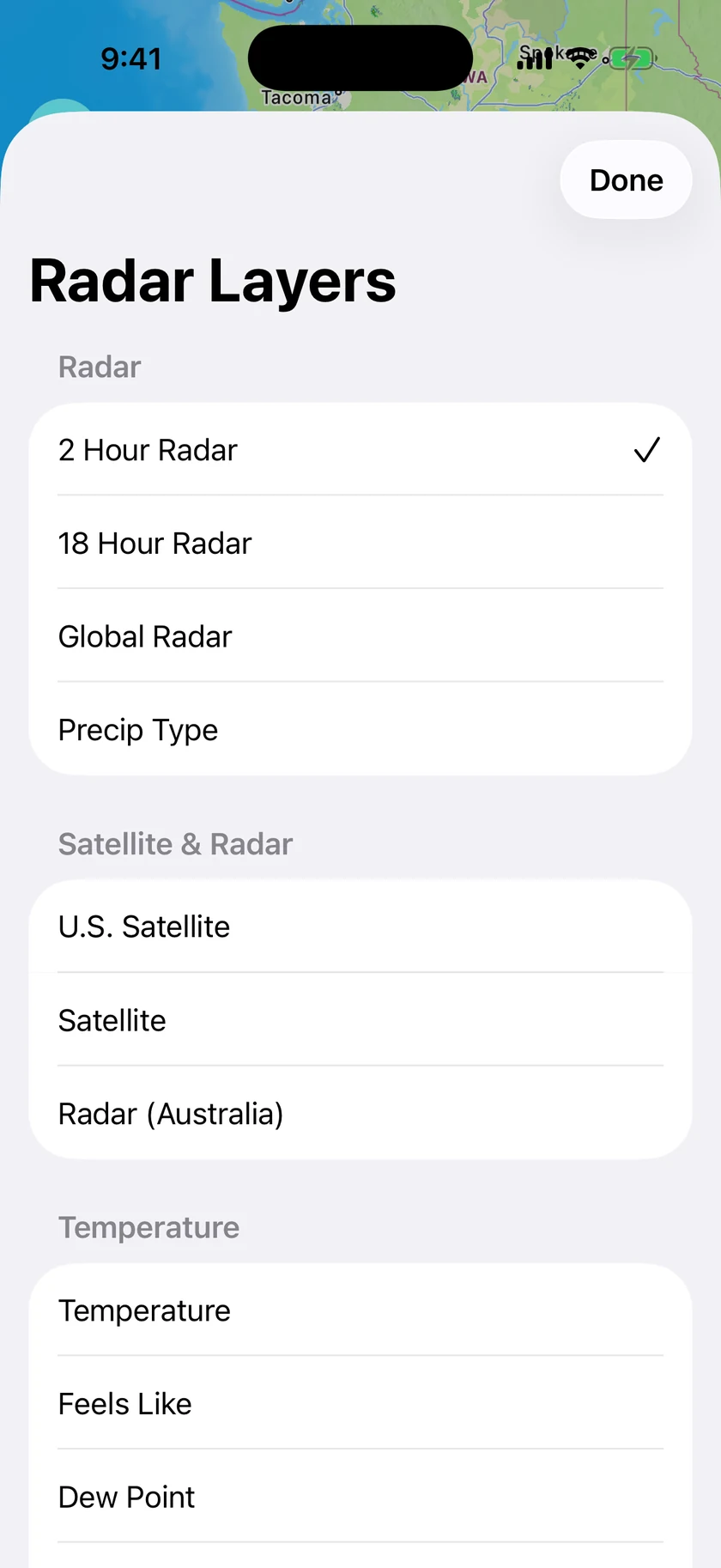
Chasing clear sky is easier with the map open.
This page tracks 54 cities. Forecast Bar tracks anywhere: hour-by-hour cloud cover for any location you save, and satellite layers on the radar map so you can watch the actual cloud field drift on eclipse evening — and move before it matters.
- Hourly cloud cover for any location on Earth
- Satellite layers on the radar map
- Data points for sunrise, sunset, and the sun's path
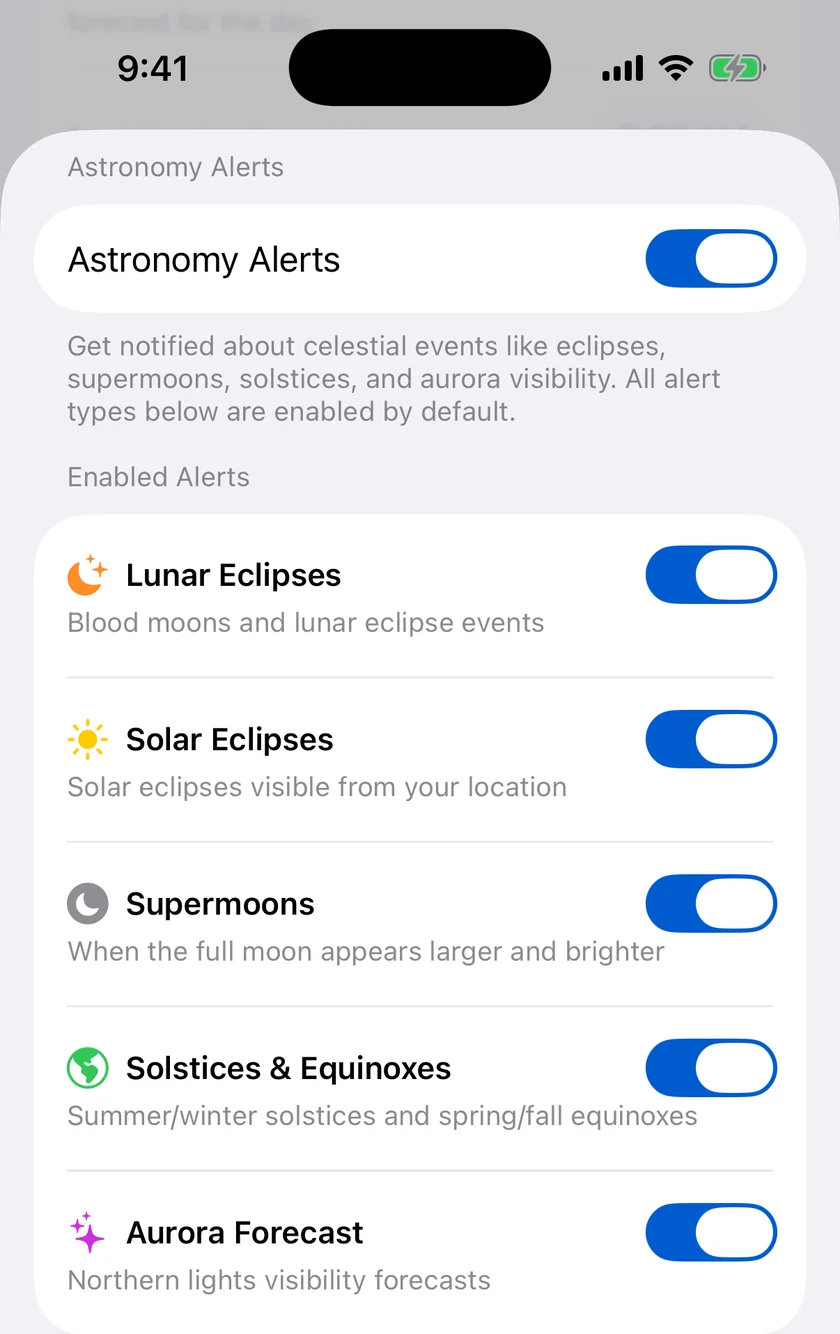
Never find out about an eclipse the day after.
Forecast Bar sends astronomy alerts for solar and lunar eclipses visible from your location — plus supermoons, solstices, equinoxes, and aurora. The next European total eclipse is only a year away; get the alert before everyone else's group chat does. Astronomy alerts are part of Forecast Bar Gold on iOS and Pro on Mac.
- Solar eclipse alerts, filtered to ones visible from your location
- Lunar eclipses, supermoons, solstices & equinoxes
- Aurora visibility, scored 0–10 for your coordinates
Honest answers
Is this page still being updated?
When is the next total solar eclipse visible from Europe?
Where does this cloud forecast come from?
How reliable is a cloud forecast made days ahead?
Does this page tell me the exact eclipse time for my city?

Your eclipse-day weather app.
Hour-by-hour cloud cover for any location, satellite on the radar, and alerts for the next eclipse. Free to download; live weather requires a subscription, with a 7-day free trial on iPhone and iPad for new subscribers.